Young Environmentalists Meet with SIT
This winter and spring, Sipson Island Trust has been proud to take part in a Nauset Regional Middle School program designed to equip eighth-grade students with the skills to bring their environmental ideas and advocacy out of the classroom and into the world around them. Taught by environmental educator and Sipson Island Trust board member Susy Remillard, The Changemakers course takes a practical, hands-on, and skills-based approach to conservation work.
During the course, students develop what Remillard calls a “changemakers toolbox,” practicing teamwork, persuasive writing, visual storytelling, public speaking, and argument mapping— the same skills used every day by environmental organizations working to protect land, water, and wildlife. Remillard’s approach is grounded in her graduate school work on teaching for sustainability. Part of her research for that program involved identifying the teachable skills environmental nonprofits identify as being most essential to conservation work, including the ability to collaborate, communicate clearly, make compelling arguments, and tailor messages to different audiences. “What I love about this work is that it answers the “so what?” question from the outset,” says Remillard. “Never is there a moment when students as what the lessons are good for. It’s clear.”
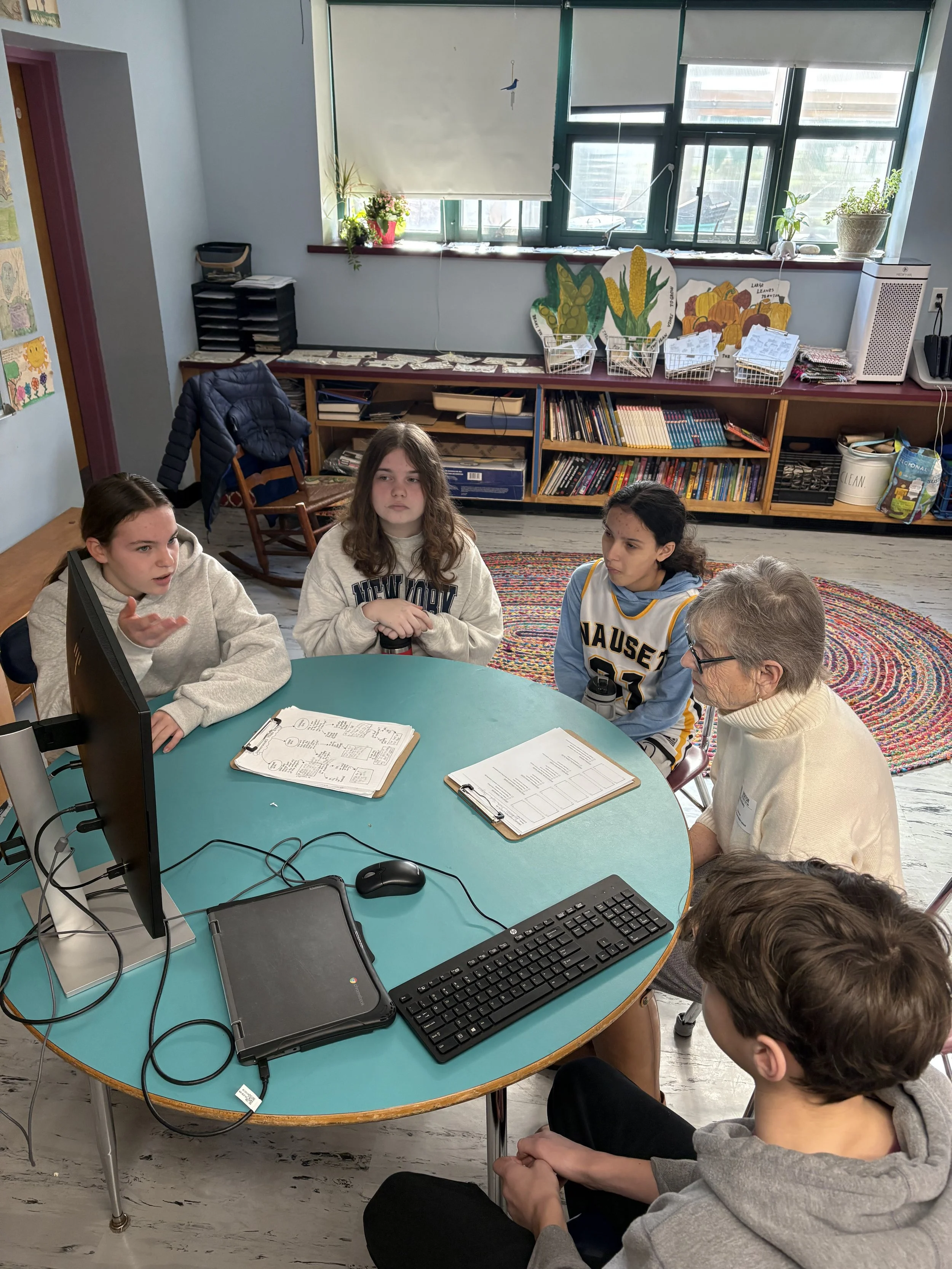
Photo at left: Alice Ronty, SIT President, collaborates with students on proposals.
In addition to teaching specific skills, a key component of the Changemakers course is partnerships with community environmental nonprofits, including Sipson Island Trust. After students are broken into working teams, community partners then visit the class to introduce their missions and pose specific questions or challenges the organization is facing. From there, student teams spend several weeks collaborating to design proposals, using the skills they’ve been developing throughout the term. Community partners return for a consultation, mentoring students and offering candid feedback—encouraging them to sharpen their thinking, refine their slides, and sometimes rethink their approach entirely. Students revise, adjust, and practice again, a great lesson in how strong advocacy is built through listening and responsiveness, as well as passion. As a final project, students formally present their ideas, delivering polished presentations to nonprofit leaders and members of the school’s administrative team.
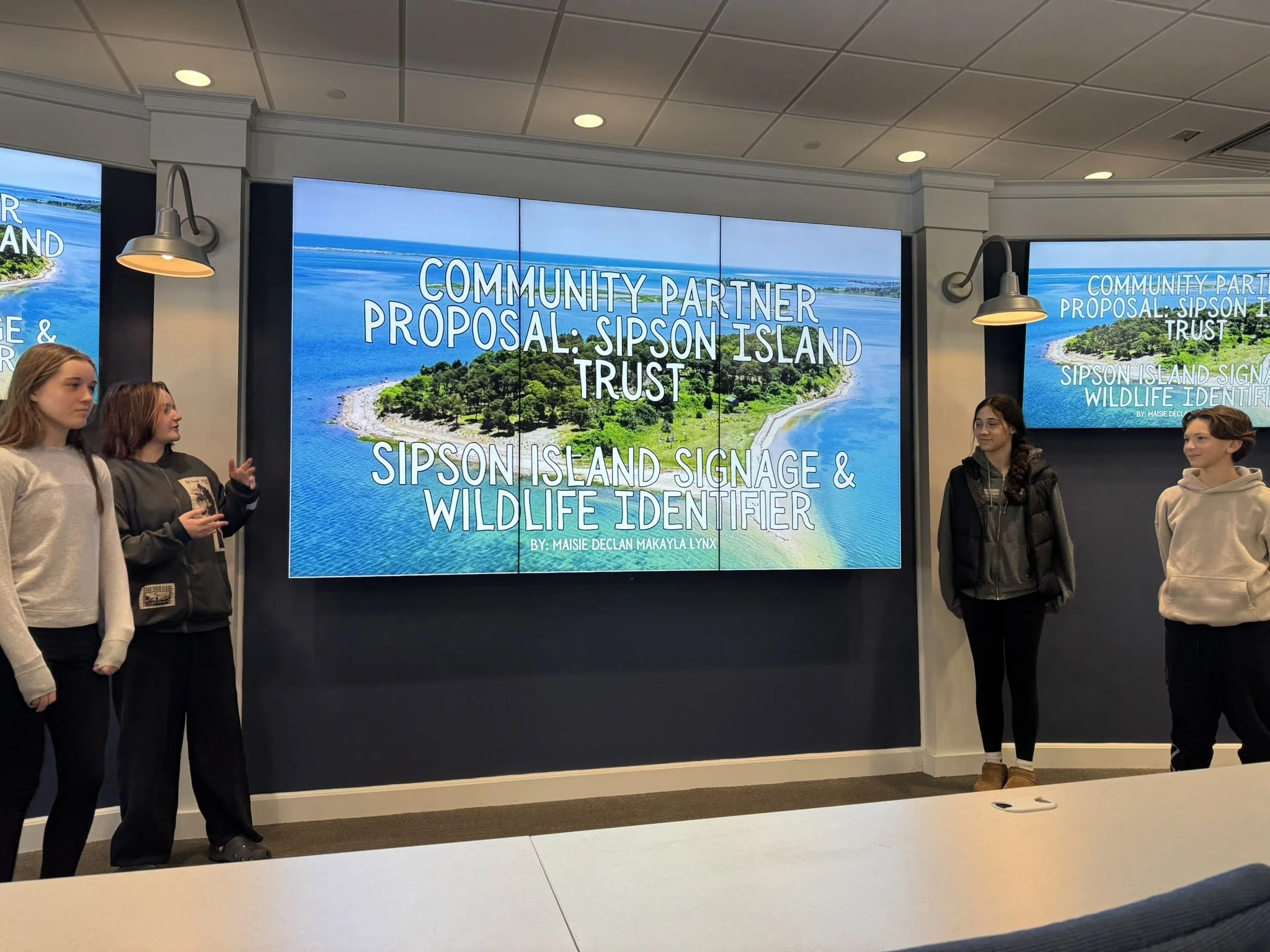
SIT first met with the Changemakers group this past winter, talking with the students about our mission and some of the organization’s ongoing projects and challenges. Later, four groups of students presented their proposals to members of the SIT board, who offered feedback and suggestions. Their ideas included a variety of ideas to support SIT’s mission, including turning the existing boathouse into a research station, removing further invasives, installing cameras and kiosks to encourage learning and research, and various ideas for labelling and identifying native species on the island. “I was highly impressed,” said board member Mon Cochran. “We didn’t have place-based learning like this when I attended that same school.”
In the end, the native species guide proposal has been emerging as the leading proposal, and this spring, students will meet again with SIT board members to present a more final version of that idea. “There’s something about rewilding an island that really captures students’ imaginations,” says Remillard, “And it has been great to see the ideas that students have come up with, and the back-and-forth with different board members.” For Sipson Island Trust, partnering with Changemakers students reflects a shared belief in education as a cornerstone of conservation. “We’ve loved being a part of the Changemakers course and collaborating with these passionate young environmentalists,” says Alice Ronty, SIT’s board chair.
Photo at right, Nauset Regional Middle School students present their ideas to community members.
In the end, the native species guide proposal has been emerging as the leading proposal, and this spring, students will meet again with SIT board members to present a more final version of that idea. “There’s something about rewilding an island that really captures students’ imaginations,” says Remillard, “And it has been great to see the ideas that students have come up with, and the back-and-forth with different board members.” For Sipson Island Trust, partnering with Changemakers students reflects a shared belief in education as a cornerstone of conservation. “We’ve loved being a part of the Changemakers course and collaborating with these passionate young environmentalists,” says Alice Ronty, SIT’s board chair.